Padel Racket Face Materials, Translated
Spec sheets throw fiberglass, 3K, 12K, 18K carbon, Fibrix, TeXtreme, Carbon Aluminized 16K, Graphene 360, and Glaphite at you as if each were a distinct material. They are not. There are two real face polymers, one dominant grade axis, a small set of surface treatments, and a lot of brand vocabulary. Here is what actually differs between padel racket faces, what is a wrapper on the same thing, and what any of it changes once the ball hits the string bed you do not have.
Two rackets on the same shop wall. One label reads Fibra de vidrio. The other reads TeXtreme 18K Carbon Alum. Same weight, similar price bracket, wildly different marketing. Are these the same material with different sales copy, two separate substrates, or one substrate with treatments layered on top? The answer is simpler than the sticker suggests. Two base materials, one grade axis, a couple of surface treatments, and a lot of brand vocabulary. Once the pieces sit in order, the next racket you buy stops being a guess.
The two base materials
Every modern padel face is built from one of two things.
Fiberglass (glass-reinforced plastic) is woven glass filaments in a resin matrix. Lighter than carbon per unit area, more flexible, softer feel on contact. It absorbs more vibration, forgives off-centre hits, and produces a larger effective sweet spot at the cost of raw ball-exit speed. The frame resists cracking well, but the surface polishes off faster. This is where entry-level and comfort rackets live. Canonical territory for beginners and players managing elbow strain.
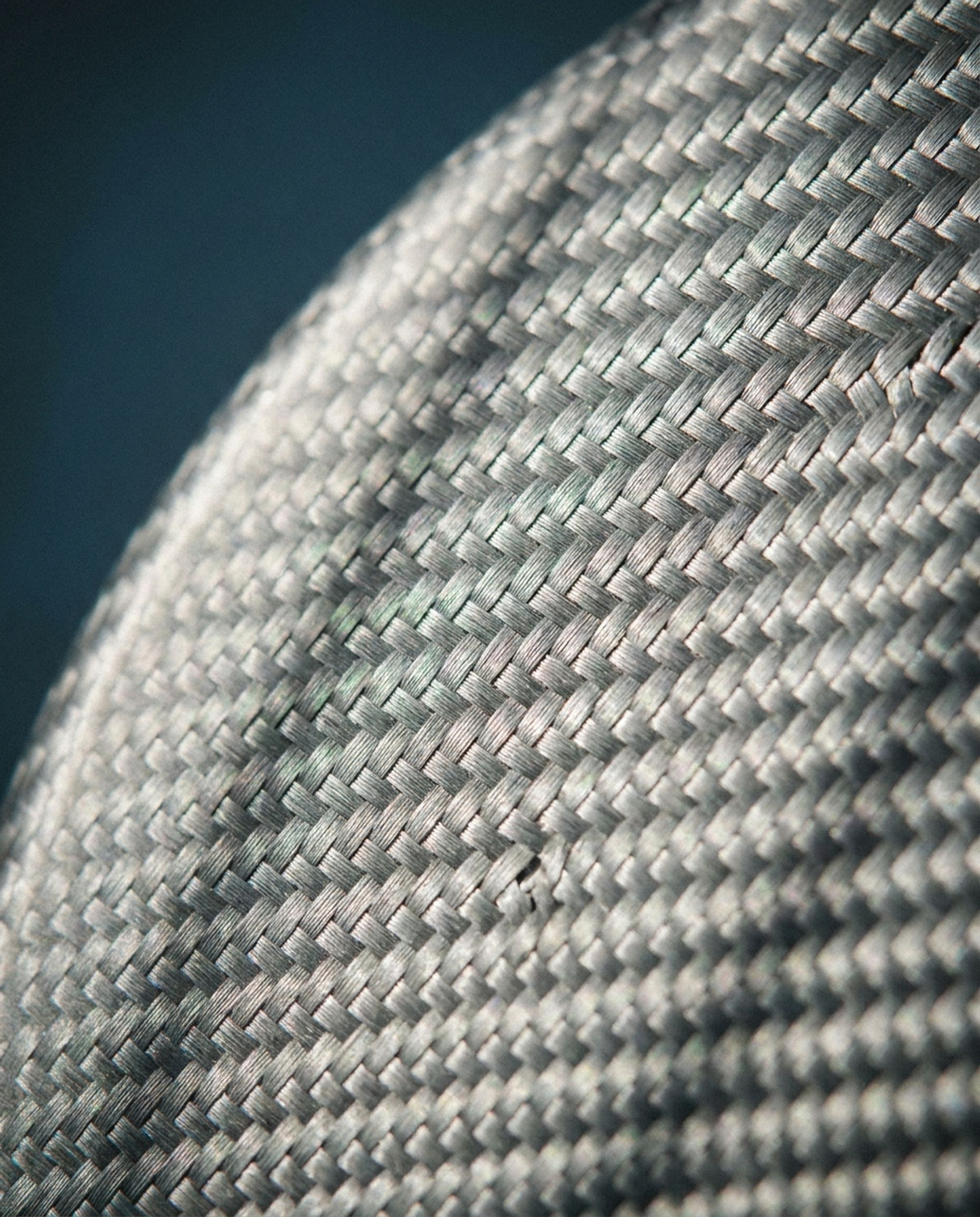
Carbon fiber is woven carbon filaments in resin. Stiffer than fiberglass, faster energy return, more direct feel on contact. Higher ball-exit speed, tighter sweet spot, more vibration into the arm. It dominates intermediate through professional rackets, and it comes in grade variants (3K, 12K, 18K, sometimes 24K) that change the weave, not the underlying polymer.
Everything else you see on a spec sheet (Glaphite, Fibrix, Carbon Aluminized 16K, Graphene 360, TeXtreme) is one of these two, sometimes both layered together, sometimes with an extra treatment applied. Hold that in mind.
What the K actually counts
A carbon fiber tow is a bundle of individual filaments. 3K means a tow of roughly 3,000 filaments. 12K, 12,000. 18K, 18,000. Materials science is unambiguous on this. Padel marketing sometimes gets loose and defines K as fibres per square centimetre, but the practical effects everyone describes are the same either way. Use the correct definition (filaments per tow), and move on.
Finer, more numerous filaments woven more densely produce a stiffer, more responsive surface. Less deformation on contact means more energy back into the ball. That reads as extra pace on smashes and more precise feedback on touch shots. It also concentrates the energy in a tighter sweet spot: off-centre contact on 18K feels harsher and produces less than off-centre contact on 3K.
How the three grades play out:
- 3K carbon. The accessible grade. More flex, larger and more forgiving sweet spot, better shock absorption. Livelier than fiberglass, softer than higher-K weaves. Beginner and improver bracket, plus specialist control rackets where forgiveness matters more than raw pace.
- 12K carbon. The mainstream tour-tier grade. Slightly more flex than 18K, a marginally larger effective sweet spot, better comfort on off-centre contact, without giving up much on top-end power. Most serious rackets in the mid range sit here, and most intermediate to advanced amateurs are best served here too.
- 18K carbon. Tour-grade stiffness. Maximum energy return per swing, most direct feedback, minimum forgiveness. Suits advanced players who generate their own pace and hit the middle of the face consistently. It punishes technique errors: mishits feel worse and produce less.
The clarification most spec sheets skip: 18K is not automatically an upgrade over 12K. Higher K means finer tows and a denser surface. It does not add carbon mass, and it does not on its own make the racket stiffer overall. Total stiffness and power come from layer count, resin, core density, shape, and balance, not weave count alone. A well-engineered 12K keeps forgiveness and pocket while still hitting hard. A lazily built 18K just shrinks the sweet spot. Do not treat the K number as a quality ladder.
Treatments and hybrids on top of the substrate
Aluminised (or metallic) carbon is a carbon weave infused with aluminium. Nox 18K Alum and 12K Xtrem sit here, as does Adidas Carbon Aluminized 16K in the Metalbone line. The face feels stiffer, more uniform, crisp and direct on ball exit. The specific marketed benefit is thermal stability: ordinary carbon composites move a little with heat and cold, and the aluminium infusion is positioned as a way to keep the surface behaving the same across temperature swings. In warm, humid conditions the thermal-stability angle is not a gimmick.
Spread-tow carbon (TeXtreme) shows up on a smaller set of high-end frames like the Siux Diablo Pro 4 and Kuikma LS Pro. General materials-science literature describes spread-tow as flattened, spread-out tows woven into a thinner, more uniform sheet, which typically improves stiffness-to-weight. Padel-specific data on how much difference it makes on court is thin. Read it as a premium weave marketed on durability and stability, not as its own material family.
Carbon-fiberglass hybrids come in two flavours. Layered hybrids stack multiple plies of fiberglass with one or more carbon plies added for pop, giving a soft base with a livelier ball exit. Blended hybrids combine carbon and glass filaments in the weave itself. Bullpadel's Fibrix (used on Comfort-line models like Vertex Comfort and XPLO Comfort) is the modern example: flexible glass fibres with rigid carbon, aimed at a soft touch that still responds. Glaphite is the older name for the same idea, weighted toward firmness with some retained elasticity.
Graphene-augmented carbon is Head's territory. Graphene 360 distributes graphene through the frame and face for durability. Graphene 360+ adds a power claim through improved energy return. Read it as a reinforcement layered into a carbon composite, not a replacement for carbon.
Adidas Signature Carbon (ASC) is both a named carbon fibre and an interlaced surface pattern that draws the Adidas logo across the face. Adidas has deliberately not published the K grade, so treat ASC as an Adidas-branded carbon face of undisclosed grade with a signature pattern, not as a separate material.
The brand-name decoder
- Fibrix (Bullpadel): blended carbon-plus-fiberglass hybrid weave. Soft and forgiving with more response than pure fiberglass.
- Glaphite: older hybrid name for carbon-plus-fiberglass, weighted toward firmness.
- 18K Alum / 12K Xtrem (Nox): aluminised carbon at 18K or 12K weave. Crisp, direct, uniform, marketed on temperature stability.
- Carbon Aluminized 16K (Adidas Metalbone): 16K carbon infused with aluminium. Firm, direct, positioned for attacking play.
- Adidas Signature Carbon (ASC): Adidas-branded carbon with an interlaced surface pattern. K grade withheld by the manufacturer.
- TeXtreme 18K (Siux, Kuikma): spread-tow 18K carbon. Premium positioning, marketed on durability and stability.
- Graphene 360 / 360+ (Head): carbon composite reinforced with graphene. The 360+ variant adds a power-oriented claim.
- Carbon composite (generic): usually shorthand for a carbon-and-fiberglass hybrid layup. Read the full spec to know which side it leans.
A quick note on names that get repeated wrong. Bullpadel's Comfort tech is Fibrix; Comfort is the model line, not the material. Head's current padel range uses Graphene 360 and Graphene 360+, not Graphene Touch. Nox publishes nothing called Exo-Frame; the proprietary names are 18K Alum, 12K Xtrem, Dual Spin Surface, and EOS Flap (which is aerodynamic, not a face material).
Spin comes from the surface, not the weave
Face material sets feel. Surface treatment sets spin. A rough, sand-blasted, 3D-relief, or silica-embossed top layer generates bite regardless of whether the substrate is fiberglass, 3K, or 18K carbon. When two 18K rackets produce different amounts of grip on the same víbora, the surface treatment is the reason, not the carbon grade.
Kevlar is reinforcement, not face
Aramid fibre (Kevlar) has high tensile strength and strong vibration damping, and it shows up in yellow-and-black weave patterns that fool a lot of people. In modern padel it is used almost entirely for frame reinforcement: bridges, throat pieces, tubular stabilisers. Vibor-A models popularly associated with Kevlar still ship with carbon face weaves (3K, 12K, 24K). When you see Kevlar in a spec sheet, read it as reinforcement paired with a carbon face, not as a Kevlar face.
Face plus core, not face alone
Face material tells you half the story. Core foam tells the other half. The rackets worth studying are the ones where face and core are deliberately mismatched (a stiff face on a softer core, or a softer face on a firmer core) to escape the classic power-versus-comfort split. Four practical quadrants:
- Stiff face plus hard core: maximum pace and precision, punishes off-centre contact. Advanced attacking profile (Adidas Metalbone Carbon Aluminized 16K on hard EVA, Nox AT10 18K Alum on Black EVA).
- Stiff face plus soft or medium core: pace on demand with a cushioned mishit. The modern balanced profile.
- Soft face plus hard core: firm platform with a forgiving surface. Uncommon.
- Soft face plus soft or medium core: maximum comfort, largest sweet spot, lowest ball-exit speed. Beginner and control-oriented territory.
Read the core in the same breath as the face. Hard face and hard racket are not synonyms.
What to actually buy
- Beginner or coming back from injury: fiberglass face, or 3K carbon if you want a step up in liveliness. Pair with a soft or medium EVA. Prioritise sweet-spot size over exit speed.
- Intermediate amateur (3.0-4.5): 12K carbon on a medium EVA. Well-engineered 12K frames keep forgiveness and pocket while still hitting hard. Jumping to 18K is not automatic upside for you.
- Advanced, generating your own pace and hitting the middle of the face reliably: 18K carbon (aluminised or not) on a harder core. Clean technique gets rewarded. Mishits get punished.
- Hot or thermally variable conditions: aluminised carbon (Nox 18K Alum or 12K Xtrem, Adidas Carbon Aluminized 16K) is specifically designed around temperature stability. Not a magic bullet, but a documented design goal worth weighting.
- Comfort or elbow strain is the deciding factor: soft face (fiberglass or a Fibrix-style hybrid) plus a soft or medium core. Face alone does not solve arm comfort; the whole system does, and handle-level damping tech is a separate lever worth knowing about.
One cross-cutting habit: before you compare two rackets, translate the marketing name into a category. Fibrix and Glaphite are the same family. 18K Alum, 12K Xtrem, and Carbon Aluminized 16K are the same treatment concept on different grades. TeXtreme is a premium weave of standard carbon. Kevlar in a spec sheet is reinforcement. Once the names collapse into two materials, one grade axis, and a small set of treatments, choosing gets much simpler.
Padel Racket Face Materials, Translated